
Introduction
We are officially living in the era of Artificial Intelligence. From writing code and generating art to driving cars and diagnosing diseases, AI has integrated into the very fabric of our daily lives. It is incredibly convenient, undeniably powerful, and, from a privacy standpoint, absolutely terrifying.
For years, we have worried about human hackers and corporate marketing teams. But the landscape has shifted. The entities reading your data, tracking your habits, and crafting your spam are no longer just people they are highly advanced, self-learning algorithms.
As machine learning models become more sophisticated, they require massive amounts of data to train. Your primary email address is the golden thread that ties all your digital data together. In an AI-driven world, giving away your permanent email is more dangerous than ever before.
In this article, we will explore the dark side of AI in digital communication, how algorithms are weaponizing your inbox, and why using a disposable email service like TempMailM is the most effective way to remain invisible to the machines.
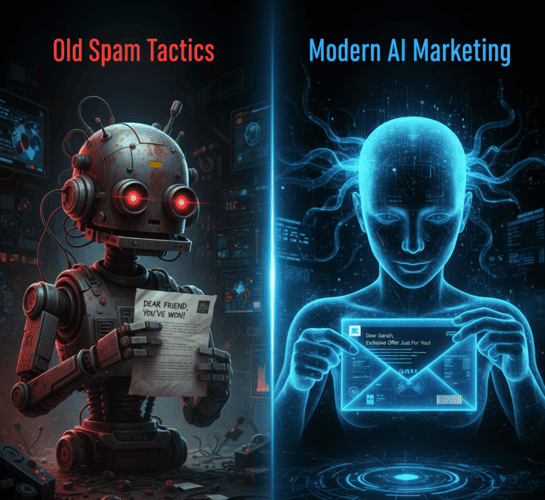
The Rise of "Hyper-Personalized" Phishing
Historically, spam and phishing emails were easy to spot. They were mass-produced, filled with terrible grammar, generic greetings like "Dear Customer," and obvious scam narratives (like the classic "Nigerian Prince").
AI has completely rewritten the rules of phishing.
Today, cybercriminals use Large Language Models (LLMs) to generate Hyper-Personalized Phishing Attacks (often called "Spear Phishing at Scale").
Here is how AI weaponizes your email:
-
Data Aggregation: An AI bot scrapes the internet for your primary email address. It finds your LinkedIn profile, your public tweets, and the comment you left on a local restaurant's blog.
-
Context Generation: The AI analyzes this data in milliseconds. It learns where you work, who your boss is, what software your company uses, and what your hobbies are.
-
The Perfect Trap: The AI drafts a flawless, grammatically perfect email. It doesn't say "Dear Customer." It says, "Hi [Your Name], I noticed you recently visited [Restaurant Name]. Can we discuss the Q3 marketing report for [Your Company]?" It includes a malicious link that looks entirely legitimate.
Because the email is so highly contextualized, the human brain drops its defenses. The click-through rate on AI-generated phishing emails is terrifyingly high.
Algorithmic Profiling and "Data Poisoning"
Phishing isn't the only threat. Legitimate corporations use AI to build incredibly intrusive profiles of your behavior.
Predictive analytics algorithms monitor which emails you open, how long you read them, and what links you click. If you use your primary email for every newsletter, e-commerce site, and app registration, you are feeding the AI exactly what it needs to predict your next move. It knows what you want to buy before you do.
How do you fight an algorithm? By starving it.
This concept is known as Data Poisoning or Data Starvation. AI models require continuous, linked data to build an accurate profile. If the data is fragmented, the AI fails.
When you use TempMailM for your online registrations:
-
You break the continuity of your data.
-
The algorithm sees a unique, random email address interacting with a website, but it cannot link that interaction to your primary identity.
-
The session ends, the email is destroyed, and the AI is left with a dead end. You have successfully starved the tracking model.
The Role of Disposable Email in the AI Era
In the past, disposable emails were seen as a simple tool to keep a tidy inbox. In 2026, they have evolved into a fundamental cybersecurity necessity.
Here is why your "AI Defense Strategy" must include temporary emails:
1. Defeating Automated Scrapers
AI web scrapers harvest millions of emails per day from public forums, registries, and leaked databases. If you must post an email publicly or register on a low-security site, using a temporary address means the AI scraper collects a "dummy" target. When the bot tries to send spam to that address a week later, it will bounce back, completely neutralizing the attack.
2. Bypassing AI-Driven "Gatekeepers"
Many websites now use AI to determine if you are a "valuable lead" before giving you access to content. They analyze your email domain (e.g., rejecting @gmail.com and demanding corporate emails). While TempMailM provides standard domains, the sheer volume and flexibility of disposable addresses allow you to test and bypass these aggressive, automated marketing funnels without surrendering your real data.
3. Protecting Your Voice and Likeness
With the rise of deepfakes and AI voice cloning, hackers only need a small sample of your data to impersonate you. If your primary email is compromised via a phishing attack, attackers can search your inbox for audio clips, videos, or personal photos to train their deepfake models. Segregating your high-risk web activity to a disposable inbox ensures your sensitive personal media remains locked safely in your primary account.
Conclusion: Man vs. Machine
The integration of Artificial Intelligence into the internet is irreversible. The tools used to track, market, and scam are faster, smarter, and more relentless than ever before. You cannot out-think an AI, and you cannot manually filter out hyper-personalized attacks once they reach your primary inbox.
The only winning move is not to play their game.
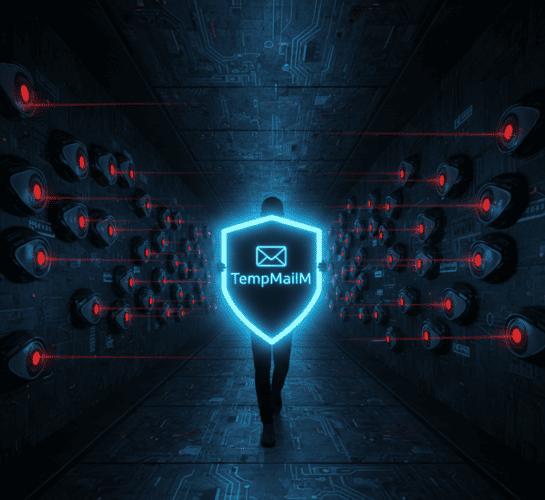
By compartmentalizing your digital life and using TempMailM as your primary interface for the open web, you deny these algorithms the very fuel they need to operate: your continuous data.
Protect your identity, starve the algorithms, and take back control of your privacy in the age of AI. Generate your digital shield today.